
Security and Conflict
Attack on School in Kabul – On Monday, an explosion caused by a hand grenade struck near the Shama-e-Hedayat private school in Mahdiya Township, in Dasht-e-Barchi, western Kabul’s 18th security district. Current reports indicate that at least 42 people were wounded. Hospital sources said many of the victims were schoolchildren aged 9–14, including girls and boys, who were leaving classes when the explosion occurred. Dasht-e Barchi is a predominantly Shia Hazara area. No group has claimed responsibility, but Taliban spokesman Zabihullah Mujahid said preliminary information suggests that ISKP or an affiliated group may have been involved.
Juma Khan Detained by Taliban – On Monday, Juma Khan Fateh, a former deputy governor of Zabul and a dissident Taliban commander, was detained after surrendering to Taliban security forces in Nusay district of Badakhshan, following a week of heavy fighting between his supporters and the Taliban. Taliban sources said the encirclement around Fateh had tightened, while Fasihuddin Fitrat, the Taliban’s army chief of staff, traveled to the district during the unrest. Images circulating online appear to show Fateh aboard a Taliban helicopter. His affiliated fighters are reportedly expected to be disarmed. There has been no public confirmation of any negotiated deal. On Saturday, Zabihullah Mujahid stated that Fateh could face criminal charges, with Taliban authorities saying that a case file and formal accusations must first be prepared and referred to judicial authorities. Taliban authorities have also reportedly been attempting to collect public complaints against him, including allegations of land and property seizures and other abuses, while citing the reported discovery of large quantities of weapons linked to his forces.
Crackdown in Nusay – On Tuesday, Taliban forces intensified security operations in Nusay district of Badakhshan following the surrender of Juma Khan Fateh. The operation included widespread house-to-house searches, arrests, and the disarmament of Fateh’s remaining fighters. Movement between several villages was restricted, while more than 100 mine workers were unable to return home after being stranded by the fighting. Some residents who resisted searches were detained, and local sources said Taliban forces had established a committee to oversee the disarmament process.
Senior NRF Commander Killed and Several Captured – On Thursday, senior National Resistance Front commander Hasib Panjshiri, also known as Hasib Qoway Markaz, was killed in a Taliban special forces operation. The NRF later confirmed his death, as did Taliban spokesman Zabihullah Mujahid. Unconfirmed reports indicate that two other resistance fighters, Romel Panjshiri and Atiq Panjshiri, were also killed, while nine additional NRF members were reportedly captured. Sources within the Taliban said the group was targeted in North Salang, and the bodies of those killed and the detainees were reportedly transferred to Taliban intelligence authorities in Parwan.
IS Reportedly Kills 25 Talibs in Nangarhar – On Sunday, August 16, around 25 Taliban members were reportedly killed in an attack by ISKP fighters in the Mamand area of Achin district, Nangarhar. Local reports claimed that several were beheaded. The reported death toll and circumstances of the attack have not been independently confirmed. Achin and the wider Shinwar region were among ISKP’s former strongholds, and a confirmed attack of this scale could indicate that the group retains operational capacity in remote parts of Nangarhar.
Second Explosion in Dasht-e Barchi –On Saturday, an explosion occurred in Dasht-e Barchi, western Kabul, near Nanwa-ei Station and opposite Paiwand Market. Initial reports attributed the blast to a hand grenade, while other sources suggested it may have involved a magnetic mine. The exact cause remains unclear. An eyewitness said the explosion struck a civilian vehicle. No casualties or damage have been confirmed, and Taliban authorities have not commented.
Taliban Shoot 2 in Badghis – On Wednesday, Taliban forces shot and killed two men riding a motorcycle near a checkpoint in Qala-e-Naw, Badghis. Local sources said the men were shot from behind and described them as local youths. Taliban police said they were members of an opposition group who intended to throw a hand grenade at the checkpoint but did not identify the group.
Fighting in Ghazni – On Tuesday, a municipal bulldozer driver died after clashes over disputed land in the Qala-e-Jawz area of Ghazni city. Residents reportedly resisted a Taliban-led effort to reclaim land classified as state-owned and threw stones at officials and vehicles. The Taliban said the driver later died from his injuries after being transferred to Kabul. Several suspects have been detained, and an investigation is ongoing.
Human Rights and Civil Liberties
Nine Women Arrested in Herat for Alleged Hijab Violations – On Tuesday, Taliban morality police reportedly arrested at least five women in two separate incidents in Herat city. Two young women were detained on Mahbas Road because they were not covering their faces, although witnesses said they were otherwise wearing full hijab. In a separate incident on Majidi Road, three women were arrested, reportedly after one was detained outside a tailor’s shop and the others protested. A man who objected was also reportedly beaten. On Friday, five more women were arrested in Herat for reported hijab violations.
Four Detained in Panjshir – On Monday, Taliban forces detained four young farmers from Kojan village in Paryan district of Panjshir and transferred them to the provincial capital. The men had no links to anti-Taliban groups, and their whereabouts remain unknown. The arrests come amid continuing reports of restrictions, military deployments, and detentions of civilians in Panjshir.
Six Detained in Parwan – On Sunday, sources in Parwan reported that the Taliban detained six people, including two former police personnel, in Salang district. The other four detainees were identified as students. The six were reportedly taken from Lalma-Sabzak village six days earlier and are now being held by the Taliban’s counterterrorism authorities in Charikar. Sources said their families have not received information about their condition. The Taliban reportedly accuse them of attacking a checkpoint, while sources deny links to opposition groups.
11 Professors Resign From Herat University over Taliban Policies – On Thursday, 11 lecturers from Herat University’s Faculty of Medicine resigned in protest over what they described as the “humiliating” treatment of university professors by Taliban morality officials. The lecturers said some professors had been detained because their beards were considered too short, following a Taliban decree imposing specific religious and appearance requirements on government employees.
Internal Politics and Taliban Policies
New Police Law Published – The Taliban have published a new 53-article police law, known as the “Shurta Law,” which formally imposes a blanket ban on all demonstrations across Afghanistan. Article 50 states that “any kind of demonstration within the territory of Afghanistan is prohibited,” without specifying exceptions, permit procedures, or other mechanisms for lawful public protest. The prohibition formally codifies restrictions on demonstrations following years of Taliban suppression of protests and detention of demonstrators. The law also broadly defines offenses related to acts ordered or prohibited by Taliban authorities concerning security and public order, potentially giving security forces wide discretion in interpreting and enforcing the restrictions.
The law establishes rules for summoning, arresting, detaining, and monitoring individuals and permits the use of weapons in situations described as rebellion, armed crimes against security, or armed conflict. While it states that detainees should not be beaten or tortured and should not be punished without a final court decision, it also gives security officials authority to impose disciplinary measures. In cases involving serious crimes, officials may threaten accused persons with death, while repeat offenders may be referred to court for punishment under Taliban criminal regulations. Taken together, these provisions raise significant human rights concerns regarding freedom of peaceful assembly, due process, protection from arbitrary detention, and safeguards against ill-treatment, particularly given the broad powers granted to security authorities and the Taliban’s previous record of suppressing dissent. The law also prohibits photographing the punishment of alleged criminals.
Taliban Collecting Information On Former Security Forces – On Friday, Taliban authorities in Daikundi ordered local councils across the province to compile detailed lists of former security and military personnel and submit them to the group’s intelligence agency. The requested information reportedly includes names, fathers’ names, residences, current occupations, and other identifying details. Taliban authorities have not publicly explained the purpose of the directive. The order follows similar measures elsewhere, including a recent request in Kunar for mosque imams to identify former security personnel for intelligence authorities.
Haqqani Calls On Afghans To Return – On Friday, during a trip to Bamiyan, acting Taliban Interior Minister Sirajuddin Haqqani called on Afghan political leaders and opponents living abroad to return to Afghanistan, saying the country remained their “home and homeland.” Haqqani said the Taliban had no personal disputes with those outside the country and remained committed to its previously announced general amnesty. He said individuals who do not act against Afghanistan’s national or Islamic interests could live freely in the country. Haqqani also said the Taliban would address the legitimate rights and demands of Hazara and Shia communities, stressing that Afghanistan belongs to all its people and calling for greater national unity.
Taliban Commissioner Calls on Afghans to Return – On Thursday, Shahabuddin Delawar, head of the Taliban’s Commission for Contact with Afghan Personalities, said 1,388 former republic officials have returned to Afghanistan over the past five years. He said returnees face no restrictions and can live, travel, and engage with the public freely, while political activity must not oppose the Taliban system. Delawar also said former officials’ assets are protected under the Taliban’s general amnesty. However, his claims contrast with reports of former officials facing restrictions, security threats, and property confiscation, while some former military personnel have been killed after returning to Afghanistan.
Taliban Claims Land in Mazar – On Tuesday, the Taliban Ministry of Justice said a special court had declared around 300 jeribs of land in Mayar Mina township in Mazar-e-Sharif as state-owned and ordered it reclaimed from current occupants. The decision is part of a broader Taliban campaign to recover land classified as government property. However, some residents and property owners have alleged that similar rulings are politically or ethnically motivated.
Freedom of Press
New Directive Issues for Media – On Tuesday, the Taliban issued new rules for employees of Afghanistan’s National Radio and Television, requiring men to maintain beards at least one fist-length, attend congregational prayers, and follow prescribed dress standards. The directive warns of disciplinary measures, including salary suspension, demotion, or dismissal, for violations.
Pro-Taliban Social Media Personality Arrested –On Saturday, Taliban intelligence forces reportedly arrested Rahim Sekandar, a social media activist and former pro-Taliban propagandist, at his clothing shop in Khost city. A local source said the arrest followed his recent criticism of Taliban policies and restrictions, particularly those affecting young people. Sekandar, who has a large following on Facebook and X, previously worked for the Taliban-linked Hariat Radio and was detained by the Taliban in 2025 over his criticism of the group.
International Developments
35 Afghans Detained in Bulgaria – On Friday, Bulgarian border police detained 35 people who identified themselves as Afghan nationals after finding them in a van near the country’s border. The vehicle’s driver, a 22-year-old North Macedonian citizen, was also detained. None of the passengers carried identification documents.
Regional Developments
Tajikistan Border Forces Kill 2 Afghan Smugglers – On Friday, Tajik media reported that two Afghan nationals from Kunduz were killed in an armed confrontation with Tajik border forces after allegedly crossing into Tajikistan with 17 kilograms of hashish. Authorities said the men fired on border guards after being ordered to surrender. Tajik officials also reported recovering two firearms.
Afghan Methamphetamine Seized in Philippines – On Sunday, Philippine authorities say they seized about 43 kilograms of methamphetamine worth 292.4 million pesos from two containers shipped from Afghanistan and declared as talc stones. The drugs were concealed in bags designed to resemble the declared cargo. The seizure follows another Afghanistan-linked interception in February. UN reports indicate synthetic drug production continues despite reduced poppy cultivation.
US Visa Processing Information/US Legal Information (Updated 8/23/26)
Court Ruling Does Not Lift the Afghan Travel Ban – A federal court recently struck down a separate State Department policy that suspended immigrant visa issuance for nationals of 75 countries, including Afghanistan. This ruling did not overturn the 212(f) travel ban affecting Afghans. Presidential Proclamation 10998 remains in effect, and Afghan SIV/IV applicants who attend visa interviews may still be denied visa issuance under 212(f).
State Department Consolidates Visa Processing in Africa – Effective August 1, the U.S. Department of State moved routine visa processing from 25 diplomatic posts in Africa to designated regional hubs. Afghan applicants in affected regions will be notified that their processing location has changed. Applicants should follow the instructions provided for their individual case and should not travel based on another applicant’s reassignment. This change affects where cases are processed, not whether a visa can be issued. The current travel ban remains in effect, and Afghan applicants subject to Presidential Proclamation 10998 may still be denied under 212(f).
Update for Afghan SIVs awaiting Interview – The expanded U.S. travel ban, which took effect January 1, 2026, continues to block Afghan SIV applicants from receiving visas or entering the United States. Despite ongoing legal challenges, the ban remains in effect. Even applicants with otherwise approved cases may be denied a visa by a U.S. embassy under Section 212(f) of U.S. immigration law. A 212(f) denial is final, not a temporary refusal, and cannot be appealed.
If the travel ban is lifted or changed in the future, an applicant denied under 212(f) may need to pursue the visa again. The denial, however, should not cancel the underlying SIV case approval, including a valid COM approval. Based on current legal guidance from IRAP, Afghans with scheduled visa appointments should consider postponing their interviews rather than risk receiving a final 212(f) denial. This has not changed despite the new court ruling listed above.
Screening for Green Card Holders Returning to the U.S. – On June 23, 2026 U.S. Supreme Court ruling increased the potential risks for some green card holders with criminal histories who travel outside the United States. When returning, border officers may treat them as seeking admission to the U.S., rather than simply returning as permanent residents. This can result in detention and immigration court proceedings that could ultimately put their green card status at risk. Green card holders with any criminal history should speak with a qualified immigration attorney before traveling outside the United States to understand how the ruling may affect their individual case. More information can be found HERE (translation available).
Asylee Follow to Join Restarted – On July 29, a federal judge in Virginia ruled in favor of Afghan asylees who had been prevented from reuniting with family members who remained overseas through the Follow-to-Join (FTJ) program. The court ruled that the administration cannot apply the travel ban to asylees seeking reunification through the FTJ process. Refugee FTJ applications remain barred by the separate refugee ban.
Protecting Yourself from Immigration Fraud – Global Refuge has released a new resource aimed at helping immigrants identify and avoid unauthorized immigration service providers. The guide explains the risks associated with the unauthorized practice of immigration law, outlines common warning signs of fraud, and highlights scams involving false promises to influence or expedite immigration cases. It also provides information on how individuals can find qualified, authorized legal assistance and protect themselves from costly mistakes that could negatively affect their immigration cases. The resource is available HERE in English, Dari, or Pashto.
USCIS Resumes Processing Immigration Benefits – On June 5, a federal court ruled in Dorcas International Institute of Rhode Island v. USCIS that USCIS could not freeze or delay immigration applications based solely on a person’s nationality. The decision ended policies affecting applicants from 39 countries, including Afghanistan, that had blocked or delayed green cards, work permits, citizenship applications, asylum cases, and other immigration benefits. USCIS has since confirmed that it is complying with the court order and has resumed processing affected cases. The government has appealed the ruling, but its request to pause the court’s decision while the appeal continues was denied on July 15. For now, the court’s order remains in effect.
Federal Agency Conducts Survey of Afghans— The Office of Refugee Resettlement (ORR) is calling Afghans who came to the U.S. in recent years. ORR says the calls are for Afghans who “may be in vulnerable situations” and are designed to connect people to services and support they are eligible for. Some have raised concerns that ORR may share information it collects with ICE. You can decide not to answer the call or choose not to answer any individual question. Many Afghans are eligible for case management and other services through programs like Preferred Communities and Intensive Case Management. Even if you do not respond to a call from ORR, you can reach out to your local refugee resettlement agency to see if you are eligible.
Pacito v. Trump – In the ongoing Pacito v. Rubio litigation challenging the suspension of the USRAP)a federal judge has allowed plaintiffs to amend their complaint, enabling expanded claims that the administration unlawfully prioritized Afrikaner refugees while excluding other refugee populations, including groups prioritized by Congress. According to the plaintiffs, more than 120,000 approved refugees remain unable to enter the United States under the current policy, while only a small number of Afghans have received exemptions. A trial in this matter is scheduled to begin in November 2026.
IRAP Afghan & Iraqi Allies v. Rubio – In the class action case Afghan & Iraqi Allies v. Rubio, a federal court is continuing to pressure the Trump administration over massive delays in the Afghan SIV program after previously ordering the government to resume processing COM applications. More information can be found HERE.
New Asylum Yearly Fees – New U.S. asylum regulations introduce application, annual, and work permit fees. Beginning May 29, 2026, applicants who fail to pay the annual fee within 30 days of notice face significant penalties. Authorities may terminate the asylum application (Form I-589), reject pending work permit requests (Form I-765), and end existing work permits after a denial unless appealed. Individuals without legal status could be placed in removal proceedings. Applicants whose cases are terminated for nonpayment may reapply but must submit a new application and pay fees again. Officials advise timely payment and consultation with legal providers if needed. More information can be found Here
Refugee Review – The U.S. government will re-examine refugee approvals for individuals admitted between January 20, 2021, and February 20, 2025, even for those who already hold Green Cards. USCIS may review both the initial refugee determination and the Form I-485 application. Green Card applications for refugees from this period are currently paused. Refugees from travel-ban countries will also be subject to the stricter review and enhanced security checks noted above. More information is available in Dari or Pashto
Work Permit Changes – Most new Employment Authorization Documents (EADs) will no longer be valid for five years. Under a new rule, many applicants will now receive EADs valid for 18 months, while others may receive permits valid for one year or less. These changes apply to applications submitted or pending on or after December 5, 2025 (for 18-month permits) and July 22, 2025 (for one-year permits). Existing EADs remain valid until their printed expiration dates.
NEXT WEEK
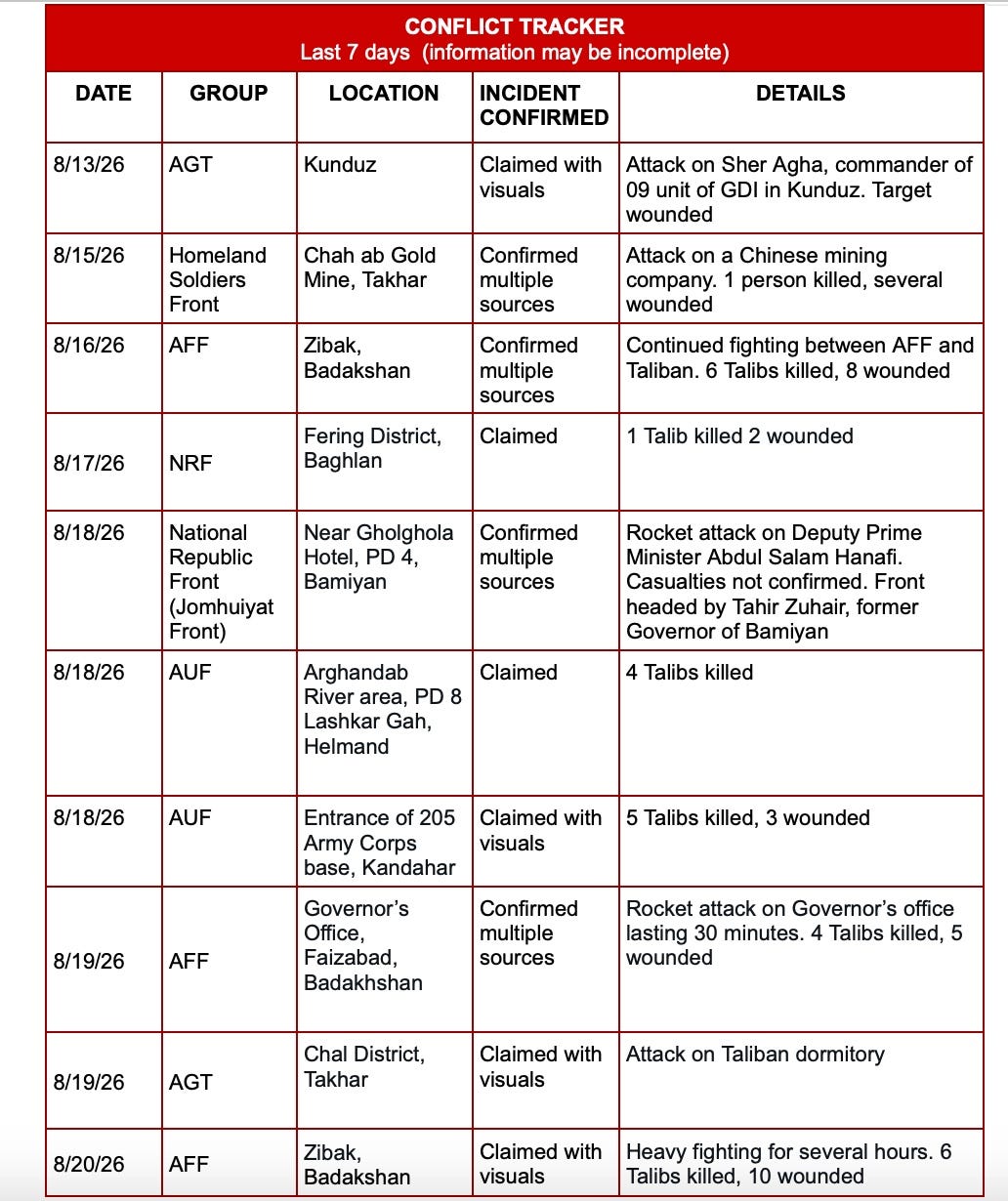
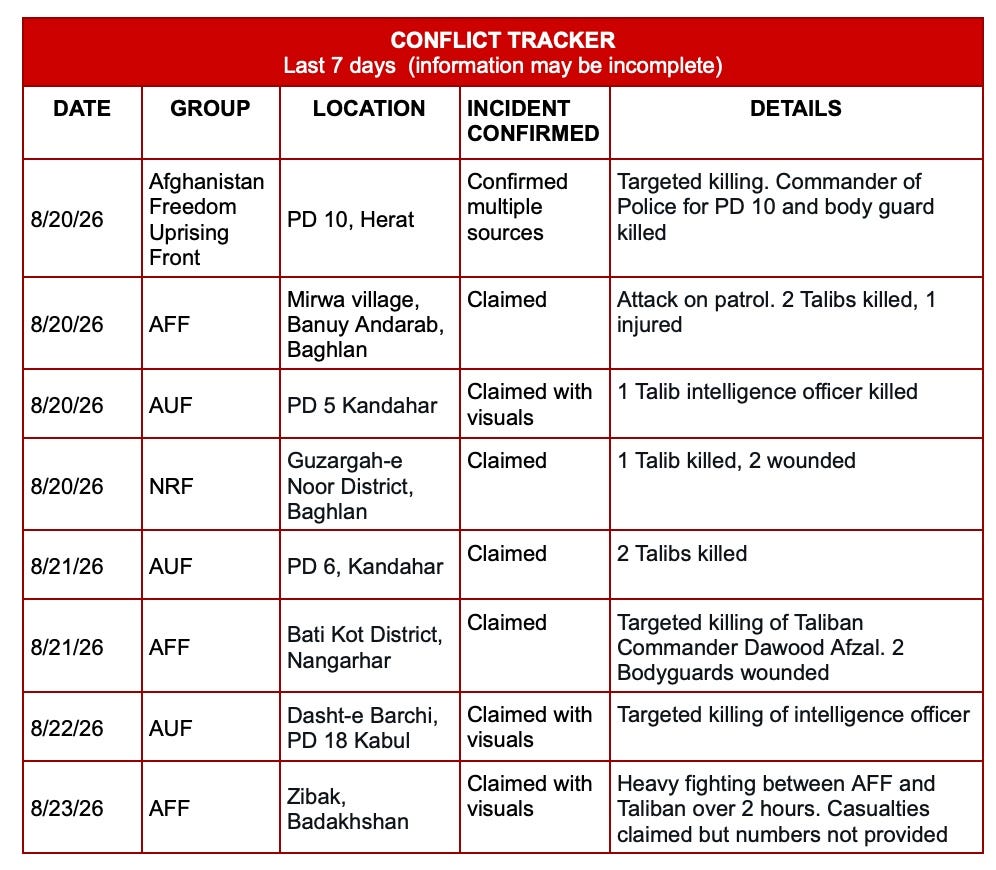
In Afghanistan, resistance activity is expected to remain high in the coming week. Afghans should exercise caution near police stations, Taliban checkpoints, and military convoys, which remain at high risk of resistance attacks. In response, the Taliban is expected to continue arrests, searches, and detentions. Individuals suspected of supporting the resistance, including through online activity, may be targeted. Former government officials, ANSF personnel, and NDS members remain at elevated risk.
The likelihood of stops at Taliban checkpoints and searches of mobile phones is also expected to increase. Individuals should avoid storing sensitive messages, photos, contacts, or documents on their devices and exercise caution with online and social media activity. Any content that could attract Taliban scrutiny should be secured or removed before traveling. Although several Afghan authorities have claimed that it is safe for Afghans outside the country to return, the Taliban continues to collect information on individuals connected to former government employees and security forces. Afghans outside the country are advised not to travel to Afghanistan at this time. Those returning face an increased risk of searches, detention, and other security threats, particularly individuals with previous government, security, political, or resistance-related affiliations.
In Pakistan, deportations of Afghans without valid visas are expected to continue. All Afghans without valid visas remain at risk of detention, property seizure, and deportation, regardless of how long they have lived in Pakistan or whether they have pending third-country visa cases, including U.S. P1/P2 or SIV applications. Afghans in Balochistan should also remain alert to the deteriorating security situation and exercise caution when traveling or moving within the province.
In the United States, the travel ban on Afghan nationals remains in effect despite several ongoing court cases. P1/P2 refugee processing remains paused. SIV COM processing has resumed, though visa issuance remains suspended. Afghan SIV and other visa applicants who attend interviews are expected to receive denials under Section 212(f), which are generally permanent and cannot be appealed. Legal aid organizations, including IRAP, continue to advise affected applicants to consider postponing interviews and to avoid submitting passports or completing medical examinations while the restrictions remain in place. Despite the new court ruling, legal experts still recommend postponing visa interviews at this time. For other updates, please see the US Visa Processing section above.
ICE enforcement activity has increased in a number of locations across the United States. All Afghans should familiarize themselves with their legal rights and be prepared for possible encounters with immigration authorities. Individuals are encouraged to review the ICE raid section of the U.S. processing guidance and consult the know your rights guide.
REGIONAL ROUNDUP
IRAN
Afghan Executed Over January Protests – On Thursday, August 20, Iranian authorities executed 20-year-old Afghan national Ghaem Hosseini at Isfahan Central Prison over his alleged involvement in protests earlier this year, according to Hengaw and the judiciary-affiliated Mizan News Agency. Hosseini was accused of participating in the January 8 unrest, during which four Special Unit officers were killed, as well as damaging an officer’s body and setting fire to a charity centre. He was sentenced to death on charges including “waging war against God,” “corruption on earth,” and acts against national security. Rights group Hengaw said Hosseini was the cousin of another Afghan national executed last month in connection with the same case.
Pakistan
Four Afghans Shot In Quetta – On Tuesday, three Afghan nationals were killed and another injured in a shooting by unidentified armed men in Quetta, Pakistan’s Balochistan province. The four Afghans had traveled from Dalbandin, near the Afghanistan border, and were waiting to continue toward Gulistan. Police said they reportedly worked for someone in Dalbandin. The motive for the attack remains unknown, and an investigation is underway. The incident follows the fatal shooting of another Afghan in Quetta last Sunday.
Significant Security Issues in Balochistan – This week, Pakistani security forces reported a series of operations against militants across Balochistan. On Monday, forces killed seven militants in Kharan and two others in Killi Zaik, where three additional militants were reportedly wounded. On Tuesday, nine militants were reportedly killed in operations in Ziarat, Harnai, and Surab. On Thursday, five militants were reported killed in Panjgur. The same day, armed men attacked a police station in Pishin and a tehsil office in Bolan, while a small dam in Sanjavi was destroyed. Responsibility for the attacks remained unclear.
Afghani to US Dollar: $1 – 65.95 AFN (As of August 23)